Understanding Heart Rate Variability (HRV): The Ultimate Guide to Recovery, Performance, and LongevityPart 2A — Sleep, Recovery, Stress, and Overtraining

Discover how sleep, stress, exercise, and recovery influence Heart Rate Variability (HRV). Learn why HRV changes every day and how elite athletes use it to optimize training and prevent overtraining.
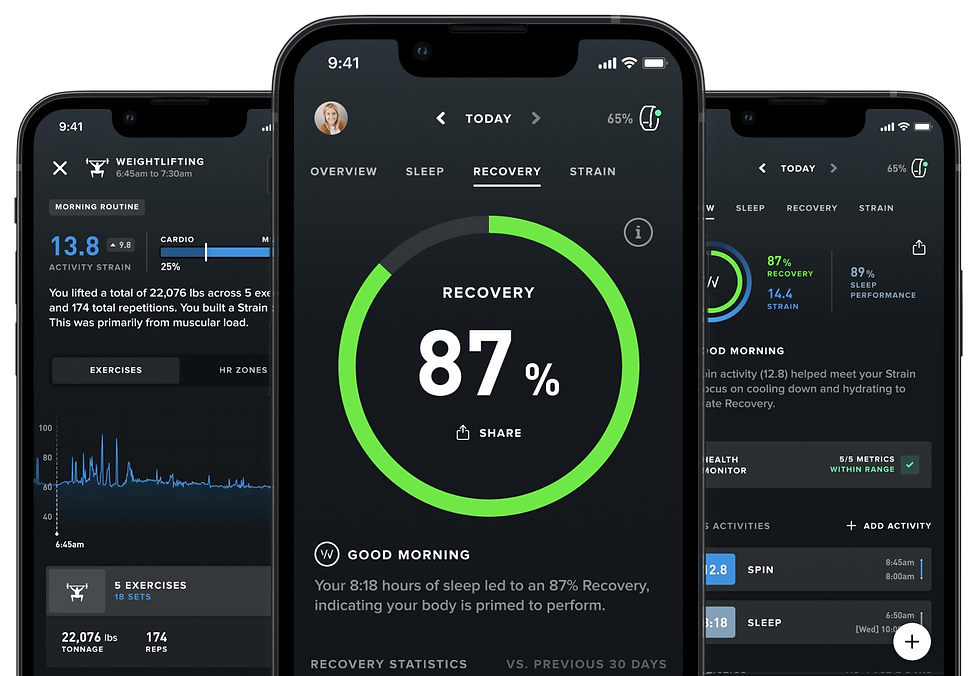
Your HRV changes every day because your body is constantly adapting to stress and recovery.
Yesterday's Workout Is Only Half the Story
Imagine two athletes.
Both complete the exact same workout.
Same distance.
Same pace.
Same heart rate.
The next morning...
Athlete A wakes up refreshed.
Athlete B feels exhausted.
What happened?
The workout wasn't the difference.
Recovery was.
HRV often captures these differences before you consciously feel them.
That's why many coaches no longer ask:
"How hard did you train?"
Instead they ask:
"How well did you recover?"
Sleep: The Greatest Driver of HRV

If there is one habit that consistently improves HRV, it is quality sleep.
During deep sleep, your body shifts toward parasympathetic dominance.
This is when:
Heart rate slows
Blood pressure decreases
Growth hormone is released
Muscles repair
Memories consolidate
The brain clears metabolic waste
HRV typically increases
Think of sleep as your body's nightly maintenance window.
Without it, recovery is incomplete.
The HRV-Sleep Feedback Loop
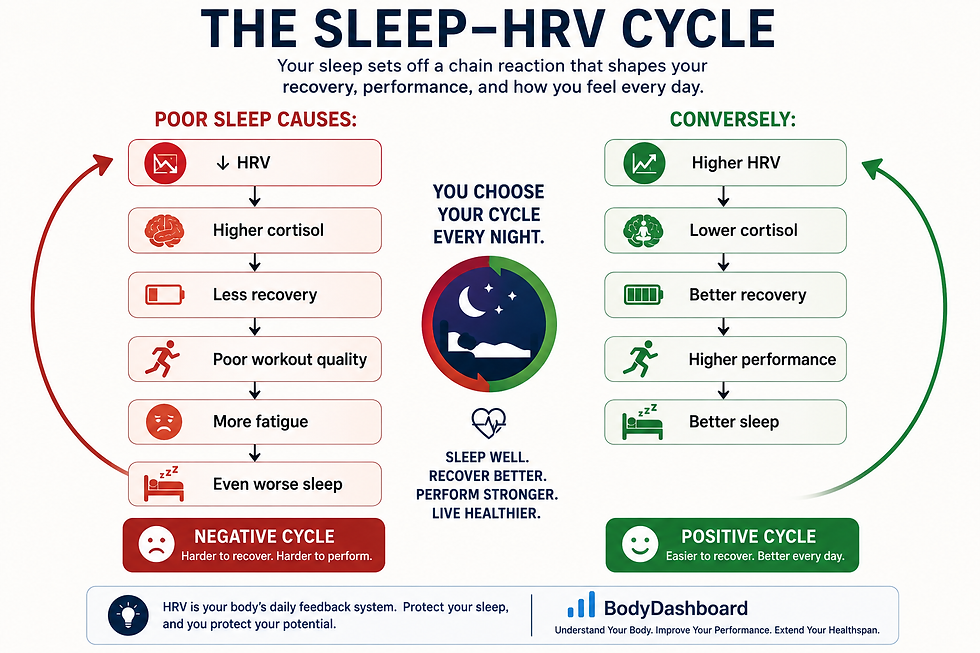
It's one of the most powerful positive feedback loops in human physiology.
HRV and Exercise
Exercise creates stress.
That's a good thing.
Without stress...
There is no adaptation.
But there's a catch.
The goal isn't to avoid stress.
The goal is to balance stress with recovery.
Think of exercise as withdrawing money from your recovery bank account.
Sleep, nutrition, and rest are the deposits.
If withdrawals consistently exceed deposits...
Performance eventually declines.
HRV helps monitor that balance.

Why HRV Drops After Hard Training
Many people become worried when their HRV decreases.
Often...
That's completely normal.
A difficult workout temporarily increases sympathetic activity.
This shifts the body toward:
⚡ Fight
⚡ Repair
⚡ Adaptation
During this period:
HRV often decreases
Resting heart rate may increase
Muscles feel sore
Recovery demands rise
This doesn't mean you've trained poorly.
It means your body is responding appropriately.
The question is:
How quickly does your HRV recover?
The Difference Between Functional Overreaching and Overtraining
Elite athletes intentionally train hard enough to temporarily reduce performance.
This is called:
Functional Overreaching
Characteristics:
Temporary HRV reduction
Increased fatigue
Performance rebounds
Recovery follows
This is normal.
Overtraining Syndrome
Much different.
Signs include:
Persistently low HRV
Elevated resting heart rate
Poor sleep
Low motivation
Increased illness
Plateaued performance
This reflects a body that is no longer adapting.
Instead...
It is simply accumulating stress.

BodyDashboard Insight
Training breaks your body down.
Recovery builds it back stronger.
HRV helps reveal which phase you're in.
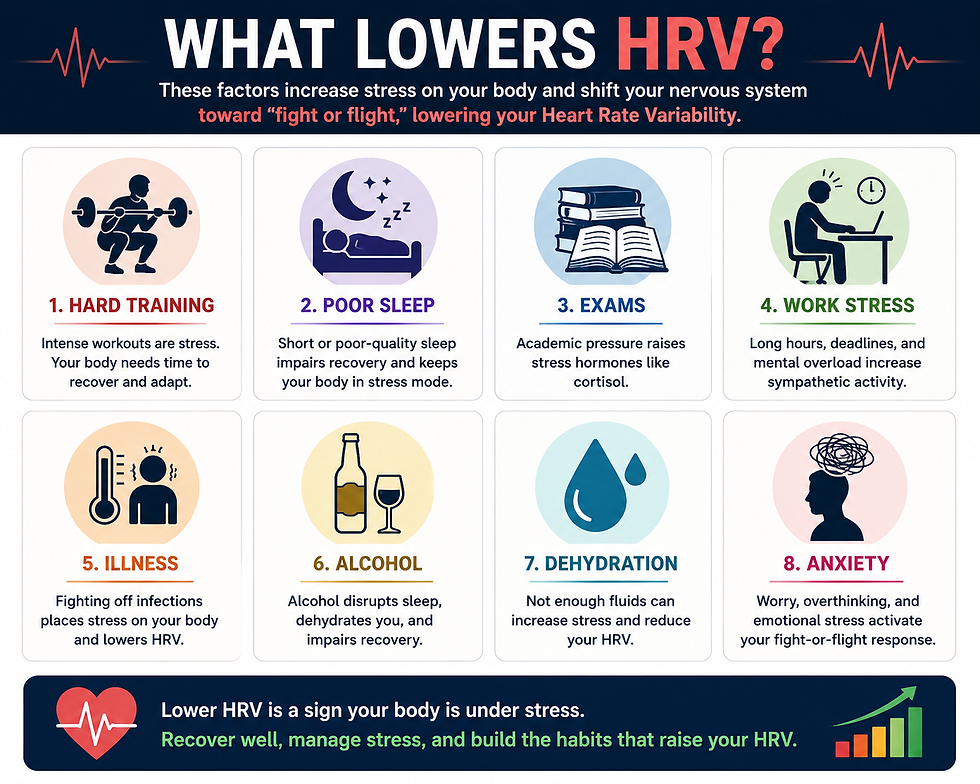
Stress Doesn't Care Where It Comes From
This surprises many people.
Your nervous system cannot distinguish between:
Heavy squats
Final exams
Poor sleep
Family stress
Financial stress
Relationship conflict
To your body...
Stress is stress.
Everything contributes to your recovery capacity.
This explains why someone can feel exhausted despite taking several days off from the gym.
They may not be physically stressed...
But mentally exhausted.
HRV and Cortisol
One of the strongest influences on HRV is cortisol.
Cortisol itself isn't bad.
It helps you:
Wake up
Train
Focus
Respond to challenges
Problems arise when cortisol remains elevated for prolonged periods.
Chronically elevated cortisol shifts the body toward sympathetic dominance.
The result often includes:
⬇ Lower HRV
⬇ Poor sleep
⬇ Slower recovery
⬇ Reduced performance
Recovery Is More Than Rest
Recovery isn't simply avoiding exercise.
Recovery means restoring your body's ability to adapt.
That includes:
Sleep
Nutrition
Hydration
Walking
Relaxation
Breathing
Social connection
Time outdoors
Every positive recovery habit nudges your nervous system toward parasympathetic activity.
Over time...
These habits help increase resilience.

The Peter Attia Perspective
Peter Attia frequently emphasizes that the body is constantly balancing stress and recovery.
Exercise is one of the healthiest forms of stress we can experience.
But only if recovery follows.
HRV provides one of the clearest daily windows into whether your body is adapting successfully.
Rather than asking:
"Did I train hard enough?"
Attia would likely encourage asking:
"Can my body recover from the stress I've imposed?"
That subtle shift changes everything.
BodyDashboard Insight
Performance doesn't improve during training.
Performance improves during recovery.
HRV helps measure that recovery.
Quick Recap
✅ Sleep is the strongest driver of HRV.
✅ Hard training temporarily lowers HRV.
✅ Recovery raises HRV.
✅ Chronic stress reduces HRV.
✅ Overtraining often presents as persistently suppressed HRV.
✅ Recovery is an active process—not passive rest.
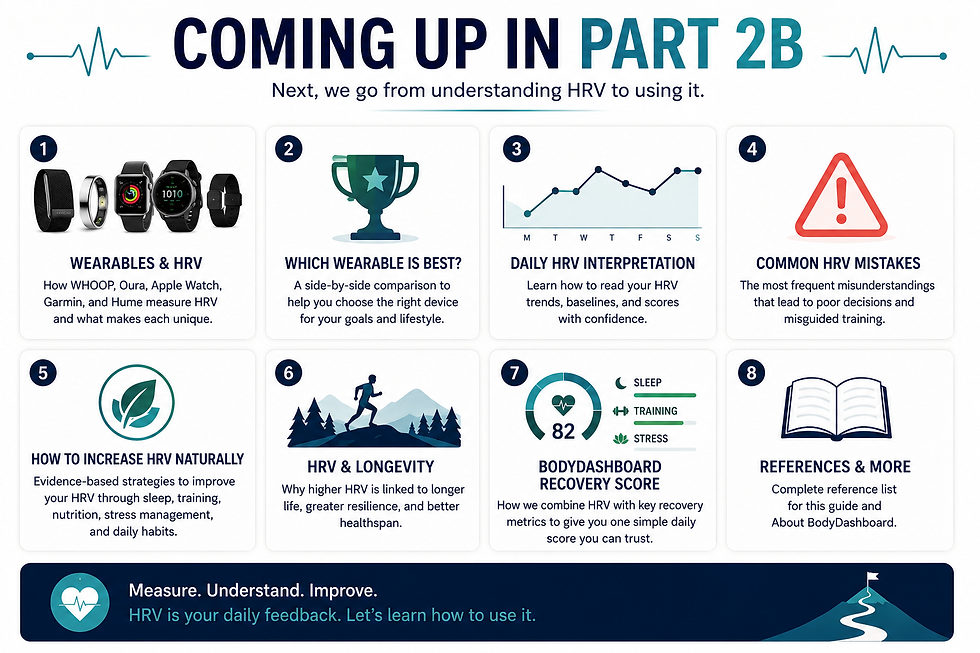
Coming Up in Part 2B
We'll explore:
How WHOOP, Oura, Apple Watch, Garmin, and Hume measure HRV
Which wearable is best
Daily HRV interpretation
Common HRV mistakes
How to increase HRV naturally
HRV and longevity
BodyDashboard Recovery Score
Complete reference list
About BodyDashboard
Related BodyDashboard Articles
What Is VO₂ Max? Why It Matters for Your Energy, Performance, and Health
Why Sleep Is the Ultimate Performance Enhancer
Nutrition: Fueling Performance, Recovery, and Longevity
Resistance Training: The Hidden Key to Strong Bones and Lifelong Health
How to Recover Faster After Workouts (Coming Soon)
About BodyDashboard
Understand Your Body. Improve Your Performance. Extend Your Healthspan.
BodyDashboard is a science-based platform exploring how sleep, nutrition, exercise, recovery, and physiology shape everything from daily performance to long-term health.
Built for student-athletes, fitness enthusiasts, and anyone curious about how the body actually works, BodyDashboard connects physiology research to practical, everyday decisions—helping readers improve energy, recovery, endurance, focus, resilience, and overall performance through simple, evidence-based systems.
Performance today. Health tomorrow. Longevity for life.


Comments