Understanding Heart Rate Variability (HRV): The Ultimate Guide to Recovery, Performance, and LongevityPart 2B-2 — Improving HRV, Longevity, and the BodyDashboard Recovery Score™

Learn how to naturally improve Heart Rate Variability (HRV), why HRV is linked to longevity, and how to use the BodyDashboard Recovery Score™ to optimize your health and performance.

The habits that improve HRV are often the same habits that improve health, performance, and longevity.
Can You Actually Increase HRV?
The answer is:
Yes—but not overnight.
Unlike heart rate, HRV isn't something you directly control.
Instead, HRV improves as your body becomes healthier, more resilient, and better able to adapt to stress.
Think of HRV as a reflection of your lifestyle.
Improve the lifestyle…
…and HRV usually follows.
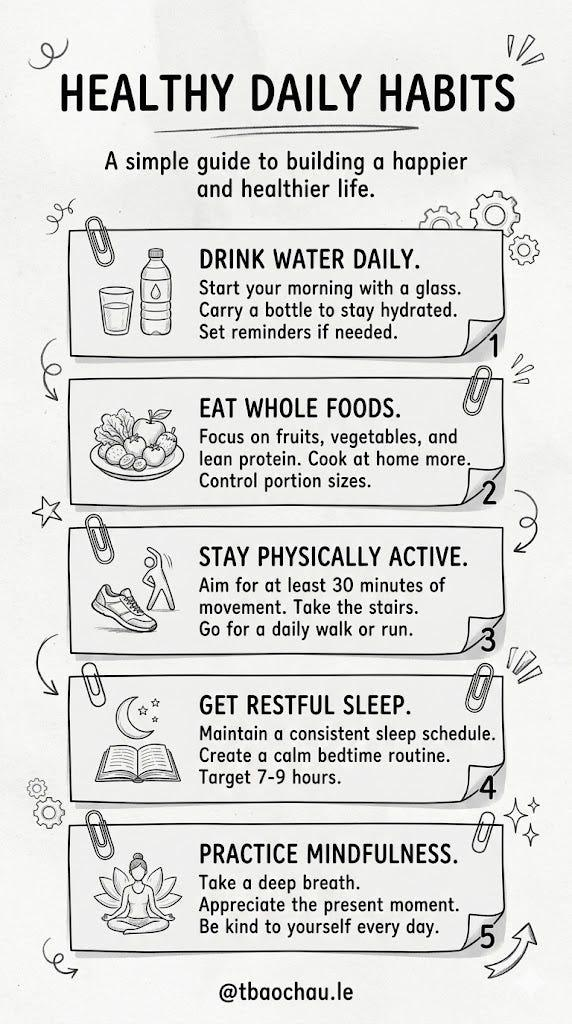
The Seven Habits That Raise HRV
😴 1. Prioritize Sleep

Nothing consistently improves HRV more than quality sleep.
Aim for:
7–9 hours
Consistent bedtime
Dark, cool room
Limited screens before bed
One excellent night won't transform your HRV.
Consistent sleep habits will.
🏃 2. Build Aerobic Fitness
Higher aerobic fitness is consistently associated with higher HRV.
This is one reason endurance athletes often have exceptionally high HRV.
Zone 2 training, walking, cycling, swimming, and running all improve cardiovascular efficiency.
Peter Attia frequently emphasizes Zone 2 training because it improves both:
Performance
Healthspan
🏋️ 3. Strength Train Consistently
Resistance training challenges your body.
Recovery from resistance training makes your body stronger.
As discussed in our article on Resistance Training and Bone Health, muscle health is one of the strongest predictors of healthy aging.
Gabrielle Lyon argues that preserving muscle throughout life supports:
Metabolism
Mobility
Recovery
Longevity
🍎 4. Eat for Recovery
Good nutrition supports your nervous system.
Prioritize:
Protein
Fruits
Vegetables
Omega-3 fats
Hydration
Limit:
Excess alcohol
Highly processed foods
Chronic calorie restriction
🧘 5. Learn to Recover From Stress
Stress isn't always bad.
Chronic stress is.
Daily habits that improve HRV include:
Walking
Meditation
Deep breathing
Time outdoors
Social connection
Your nervous system needs opportunities to switch from:
⚡ Fight-or-flight
to
🌿 Rest-and-digest.
💧 6. Stay Hydrated
Even mild dehydration increases physiological stress.
Hydration influences:
Heart rate
Blood pressure
Exercise performance
HRV
Simple habit.
Huge impact.
🦠 7. Listen to Your Body
HRV is feedback.
Use it.
If your HRV is suppressed for several days:
Maybe today isn't the day for another maximal workout.
Recovery is productive training.
HRV and Longevity
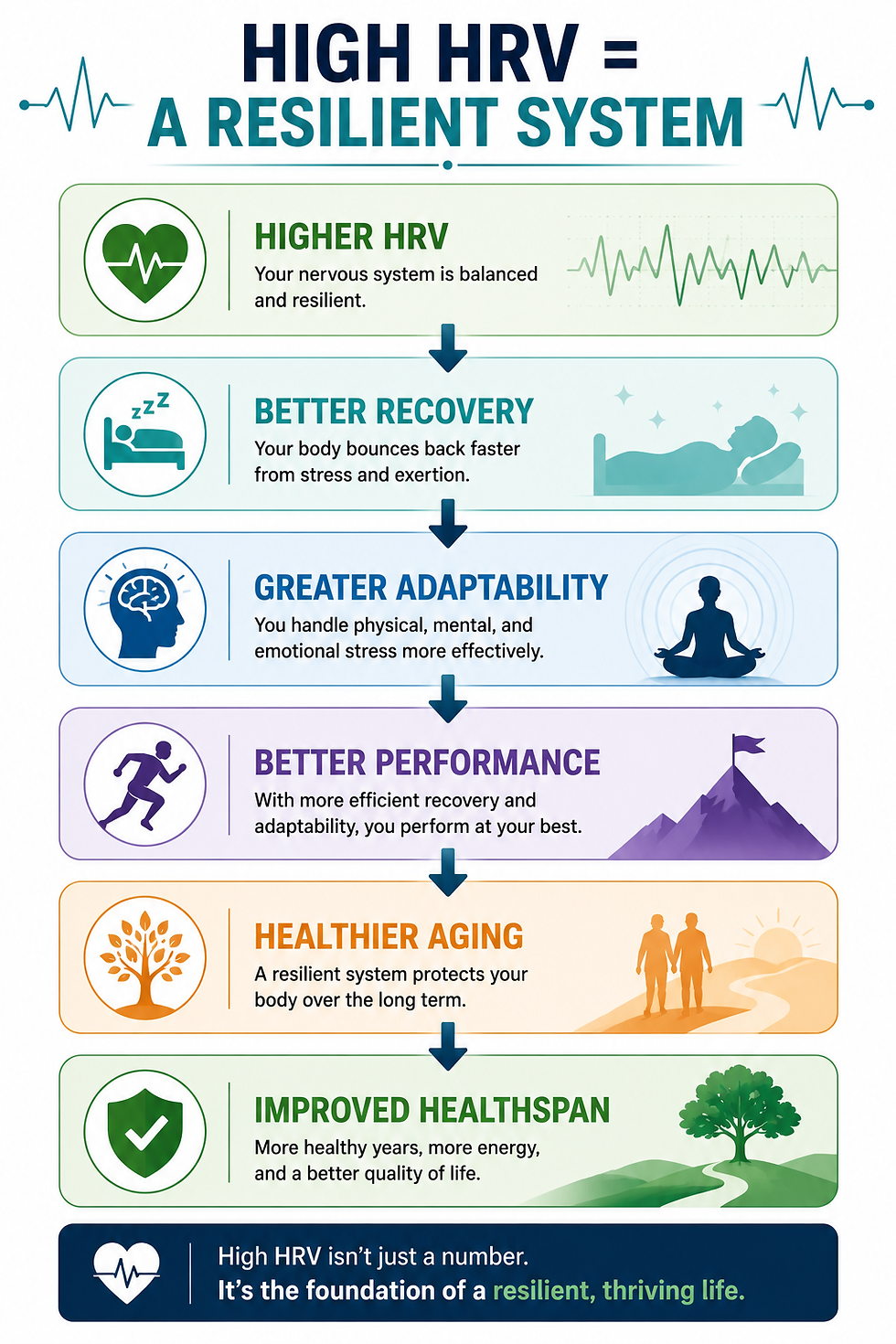
One of the most exciting areas of HRV research is longevity.
Higher HRV has been associated with:
Better cardiovascular health
Lower inflammation
Greater resilience
Healthier autonomic function
Researchers continue to investigate HRV as a marker of healthy aging.
This aligns beautifully with Peter Attia's philosophy in Outlive.
Rather than waiting for disease to appear...
Measure markers that reflect resilience before disease develops.
HRV isn't a guarantee of health.
But it provides valuable insight into how well your body adapts.
Introducing the BodyDashboard Recovery Score™
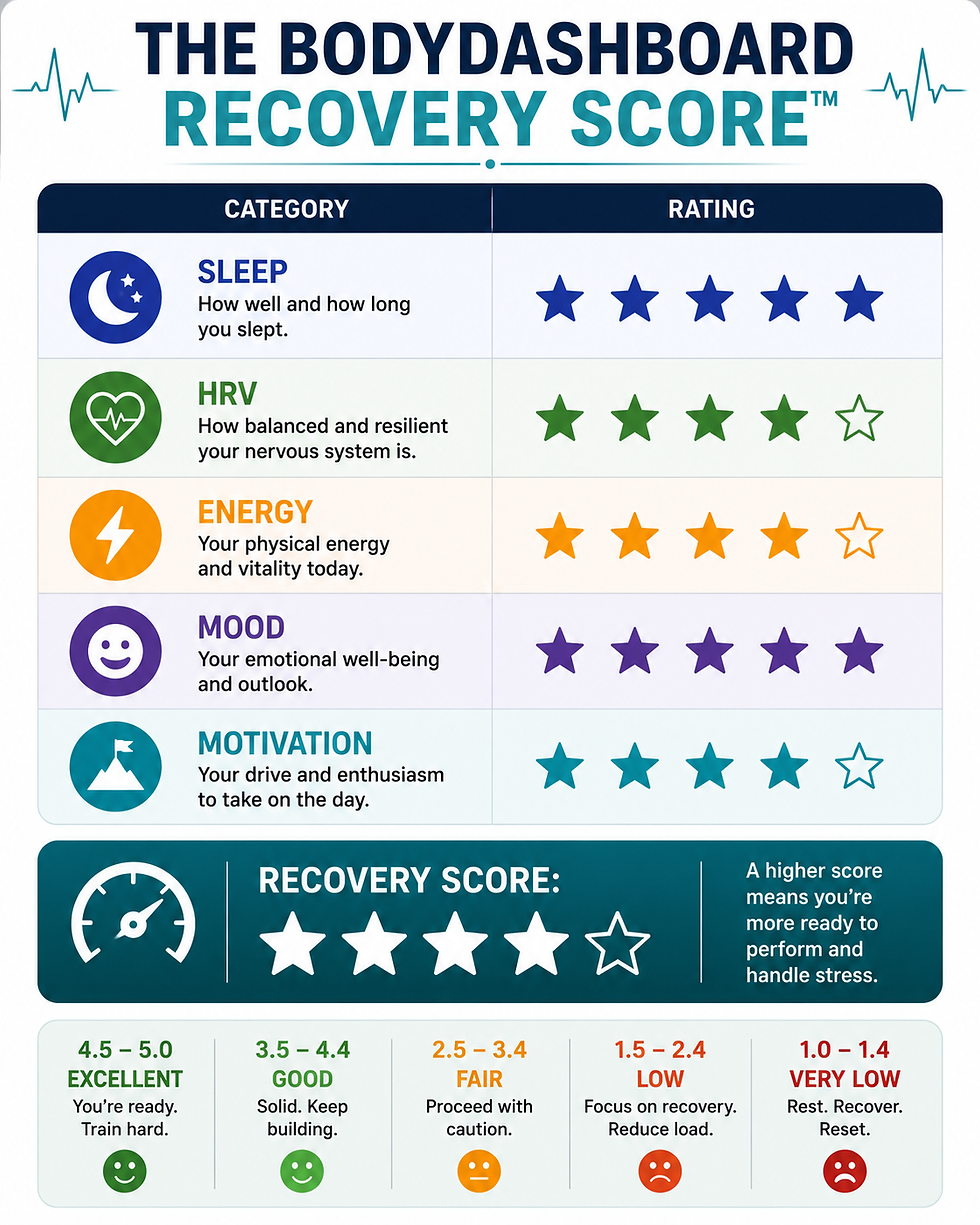
Most wearables produce dozens of numbers.
BodyDashboard simplifies them.
Every morning, ask yourself five questions.
❤️ Recovery
How rested do I feel?
⭐⭐⭐⭐☆
😴 Sleep
Did I sleep well?
⭐⭐⭐⭐⭐
📈 HRV
Is my HRV close to baseline?
⭐⭐⭐⭐☆
⚡ Energy
How energized do I feel?
⭐⭐⭐⭐☆
💪 Motivation
Am I excited to train?
⭐⭐⭐⭐⭐
Average your score.
5 Stars
Train hard.
4 Stars
Normal training.
3 Stars
Train, but monitor intensity.
2 Stars
Recovery focus.
1 Star
Rest.
Recover.
Sleep.
Repeat tomorrow.
BodyDashboard Insight
Don't let technology make your decisions.
Use technology to make better decisions.
Your wearable provides data.
Your body provides context.
Together they tell the story.
Final Thoughts
Heart Rate Variability isn't a magic number.
It's a conversation.
Every day your body tells you:
How well you're recovering.
How much stress you're carrying.
Whether you're adapting—or simply accumulating fatigue.
The goal isn't to achieve the highest HRV possible.
The goal is to build a healthier, more resilient body.
At BodyDashboard, that's exactly what we're trying to understand.
Because better recovery creates better performance.
And better performance supports a healthier life.
Quick Recap
✅ HRV reflects recovery—not effort.
✅ Better sleep increases HRV.
✅ Aerobic fitness supports HRV.
✅ Strength training builds resilience.
✅ Nutrition influences recovery.
✅ Stress management matters.
✅ Trends matter more than numbers.
Continue Exploring BodyDashboard
👉 What Is VO₂ Max? Why It Matters for Your Energy, Performance, and Health
👉 Why Sleep Is the Ultimate Performance Enhancer
👉 Nutrition: Fueling Performance, Recovery, and Longevity
👉 Resistance Training: The Hidden Key to Strong Bones and Lifelong Health
👉 Understanding Heart Rate Variability (Part 1)
👉 Understanding Heart Rate Variability (Part 2A)
👉 Understanding Heart Rate Variability (Part 2B-1)
👉 Why Muscle Is the Organ of Longevity (Coming Soon)
References
Harvard Medical School. Heart Rate Variability: A New Way to Track Well-Being.
Cleveland Clinic. Heart Rate Variability (HRV).
Whoop. Heart Rate Variability (HRV): What It Is and Why It Matters.
Oura Health. HRV educational resources.
Outlive.
Forever Strong.
About BodyDashboard
Understand Your Body. Improve Your Performance. Extend Your Healthspan.
BodyDashboard is a science-based platform exploring how sleep, nutrition, exercise, recovery, and physiology shape everything from daily performance to long-term health.
Built for student-athletes, fitness enthusiasts, and anyone curious about how the body actually works, BodyDashboard connects physiology research to practical, everyday decisions—helping readers improve energy, recovery, endurance, focus, resilience, and overall performance through simple, evidence-based systems.
Performance today. Health tomorrow. Longevity for life.


Comments