What DOMS Really Means

The BodyDashboard Guide to Muscle Soreness, Recovery, and Smarter Training
Part 2A – Recovery, Sleep, HRV, and Returning to Training
Learn how to recover from delayed onset muscle soreness (DOMS), why sleep and nutrition matter, how HRV changes during recovery, and when it's safe to train sore muscles.

Recovery doesn't eliminate soreness—it transforms muscle damage into strength.
Soreness Is Only Half the Story
Imagine two athletes completing the exact same workout.
Both perform:
The same weight
The same repetitions
The same intensity
Three days later...
One athlete feels refreshed.
The other still struggles to walk.
Why?
The workout wasn't different.
The recovery was.
DOMS isn't simply about what happens in the gym.
It's about what happens after the gym.
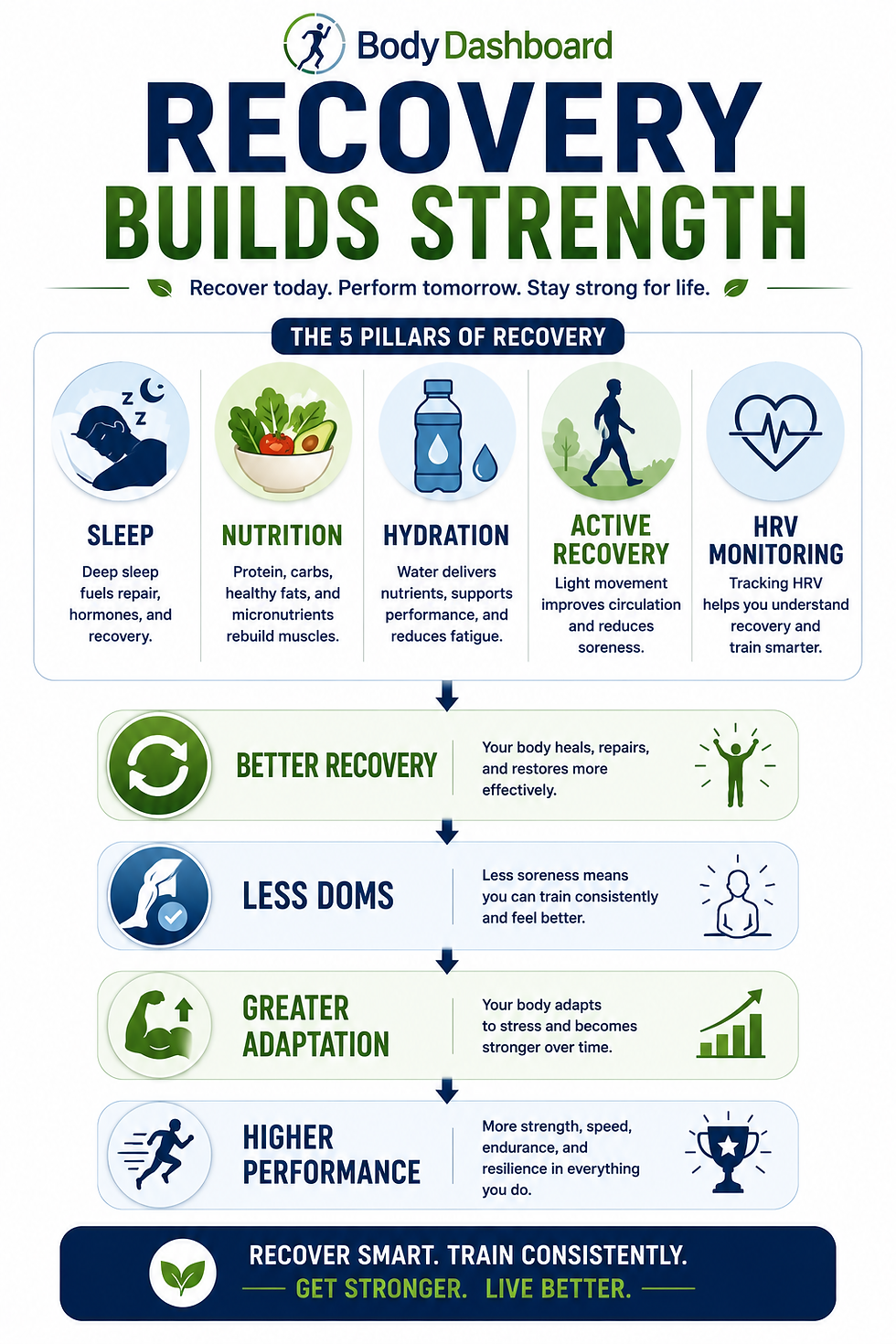
At BodyDashboard, recovery isn't viewed as time off.
It's viewed as part of the workout itself.
Let's continue reading the dashboard.
Recovery Is Where Muscles Grow
Every workout creates stress.
Recovery determines how your body responds.
Think of training as sending your muscles a message:
"Become stronger."
Recovery is how your muscles answer.
Without recovery:
Muscle repair slows
Adaptation decreases
Future performance suffers
Training breaks muscle down.
Recovery builds it back.

🛌 Sleep: Your Greatest Recovery Tool
If you could choose only one recovery strategy...
Choose sleep.
During deep sleep:
Growth hormone increases
Muscle protein synthesis accelerates
Tissue repair begins
Inflammation resolves
The nervous system recovers
Athletes who consistently sleep well generally experience:
Less soreness
Better recovery
Improved strength gains
Lower injury rates
Sleep is where much of yesterday's workout becomes tomorrow's progress.
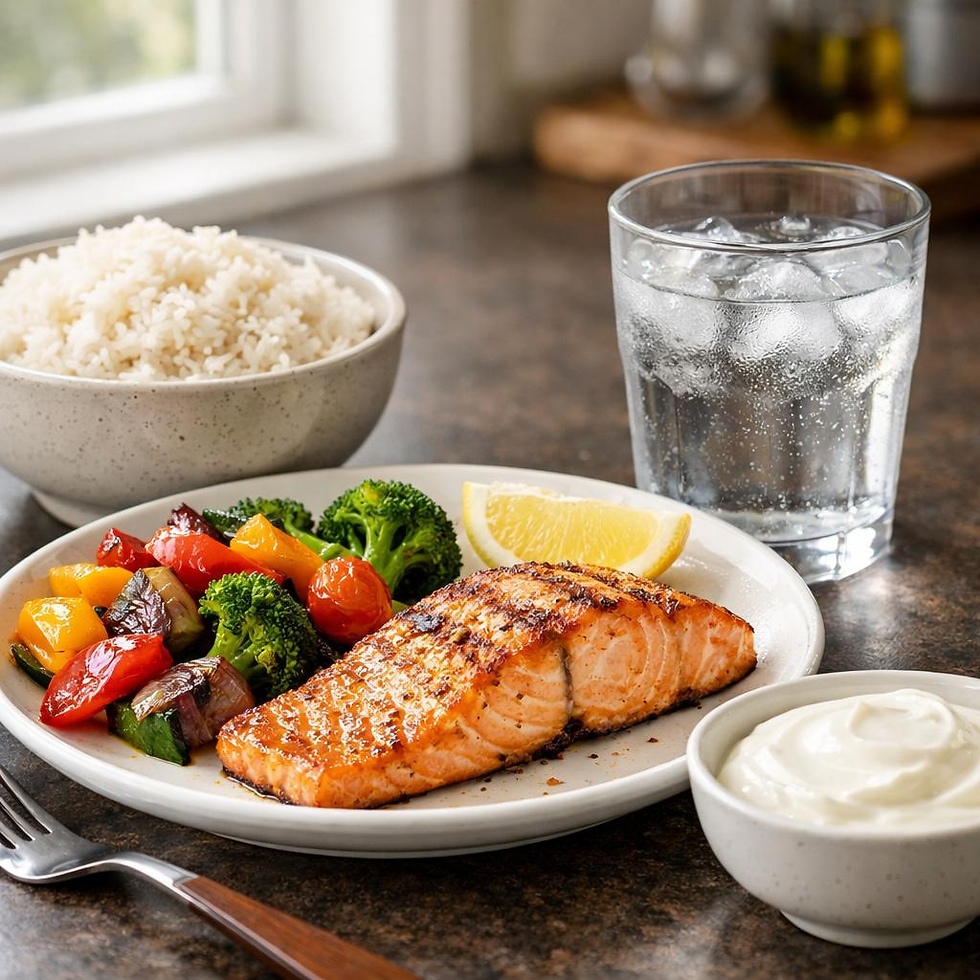
The Role of Nutrition
Your muscles can't rebuild without raw materials.
Protein provides the amino acids necessary to repair damaged fibers.
Carbohydrates replenish muscle glycogen.
Healthy fats help regulate inflammation.
Hydration supports nutrient delivery.
Think of nutrition like construction supplies.
The workers (your cells) can't rebuild if the materials never arrive.
Should You Train When You're Sore?
One of the most common fitness questions.
The answer depends on:
Mild DOMS
✅ Usually safe to train.
You may:
Reduce intensity
Warm up longer
Train different muscle groups
Moderate DOMS
Proceed carefully.
Ask:
Is my movement normal?
Is strength preserved?
If yes...
Light training is often appropriate.
Severe DOMS
If walking, lifting your arms, or basic movement becomes extremely painful...
Recovery is usually the better choice.
BodyDashboard Insight
Soreness isn't a badge of honor.
It's information.
Listen to it.
HRV and Muscle Recovery
Heart Rate Variability (HRV) often changes after challenging workouts.
Healthy recovery usually looks like:
Workout
↓
Temporary HRV decrease
↓
Sleep
↓
Recovery
↓
HRV rebounds
↓
Adaptation
If HRV remains suppressed for several days...
Recovery may be incomplete.
This is why HRV and DOMS work so well together.
DOMS tells you how your muscles feel.
HRV tells you how your nervous system feels.
Together...
They provide a much clearer picture of recovery.

Active Recovery vs Complete Rest
Many people assume complete rest is always best.
Research suggests otherwise.
Light movement often improves:
Blood flow
Mobility
Perceived soreness
Examples include:
🚶 Walking
🚴 Easy cycling
🏊 Swimming
🧘 Yoga
The goal isn't another workout.
The goal is helping your body recover.
🎨 Canva Graphic

Foam Rolling: Does It Work?
Foam rolling doesn't eliminate muscle damage.
But many studies suggest it may:
Reduce soreness
Improve flexibility
Increase range of motion
Think of foam rolling as symptom management.
It doesn't replace sleep or nutrition.
Ice or Heat?
For ordinary DOMS:
Heat often helps:
🔥 Warm shower
🔥 Heating pad
🔥 Sauna
Ice may help immediately after acute injuries.
For delayed muscle soreness...
Gentle movement and heat are often more comfortable.
Stretching
Stretching feels good.
But stretching alone doesn't significantly reduce DOMS.
Instead:
Use stretching to improve:
Mobility
Comfort
Movement quality
Not necessarily soreness.
🚨 DOMS vs Injury
DOMS should gradually improve.
Pain from an injury often:
Becomes sharper
Worsens with movement
Occurs near joints
Produces swelling
Limits normal function
If pain feels severe...
Stop.
Recovery should never involve pushing through suspected injury.
🚨 When Soreness Isn't Normal
DOMS is common.
But extremely severe soreness accompanied by:
Dark urine
Extreme weakness
Significant swelling
Severe pain
may indicate a rare but serious condition called:
Rhabdomyolysis
This requires immediate medical attention.
Fortunately...
For most people, ordinary soreness is simply part of adaptation.
The Peter Attia Perspective
Peter Attia emphasizes that exercise should improve your capacity—not reduce it.
Temporary soreness is normal.
Persistent inability to recover is not.
Recovery should increase your ability to train tomorrow.
The Gabrielle Lyon Perspective
Gabrielle Lyon reminds us that muscle is one of the body's greatest investments for healthy aging.
Every recovery session contributes to preserving that muscle.
Recovery isn't laziness.
It's construction.
👤 How This Applies to You
🎓 High School
Sore after sports practice?
Sleep and nutrition are your greatest recovery tools.
🏫 College
Recovery often suffers first.
Unfortunately...
That's exactly when you need it most.
💼 Adults
Don't stop exercising because you're sore.
Learn to recover smarter.
Consistency beats intensity.
BodyDashboard Insight
Your muscles don't know what day it is.
They only know whether you've given them enough resources to recover.
Quick Recap
✅ Sleep is your most powerful recovery tool.
✅ Nutrition supplies the building blocks for repair.
✅ HRV helps monitor recovery.
✅ Mild soreness is usually safe.
✅ Active recovery often beats complete rest.
✅ DOMS gradually improves.
Sharp pain deserves attention.
Coming Up in Part 2B
We'll explore:
Does ice reduce muscle growth?
Massage guns and recovery
Compression garments
Supplements that actually work
Anti-inflammatory nutrition
The BodyDashboard DOMS Recovery Score™
Returning to peak performance
Complete references
Continue Exploring BodyDashboard
👉 Inflammation: Friend or Foe
👉 Understanding Heart Rate Variability (HRV)
👉 Why Sleep Is the Ultimate Performance Enhancer
👉 Nutrition: Fueling Performance, Recovery, and Longevity
👉 Resistance Training: The Hidden Key to Strong Bones
👉 How Stress Impacts Your Gains
About BodyDashboard
Understand Your Body. Improve Your Performance. Extend Your Healthspan.
BodyDashboard is a science-based platform exploring how sleep, nutrition, exercise, recovery, and physiology shape everything from daily performance to long-term health.
Built for student-athletes, fitness enthusiasts, and anyone curious about how the body actually works, BodyDashboard connects physiology research to practical, everyday decisions—helping readers improve energy, recovery, endurance, focus, resilience, and overall performance through simple, evidence-based systems.
Performance today. Health tomorrow. Longevity for life.


Comments